

 English
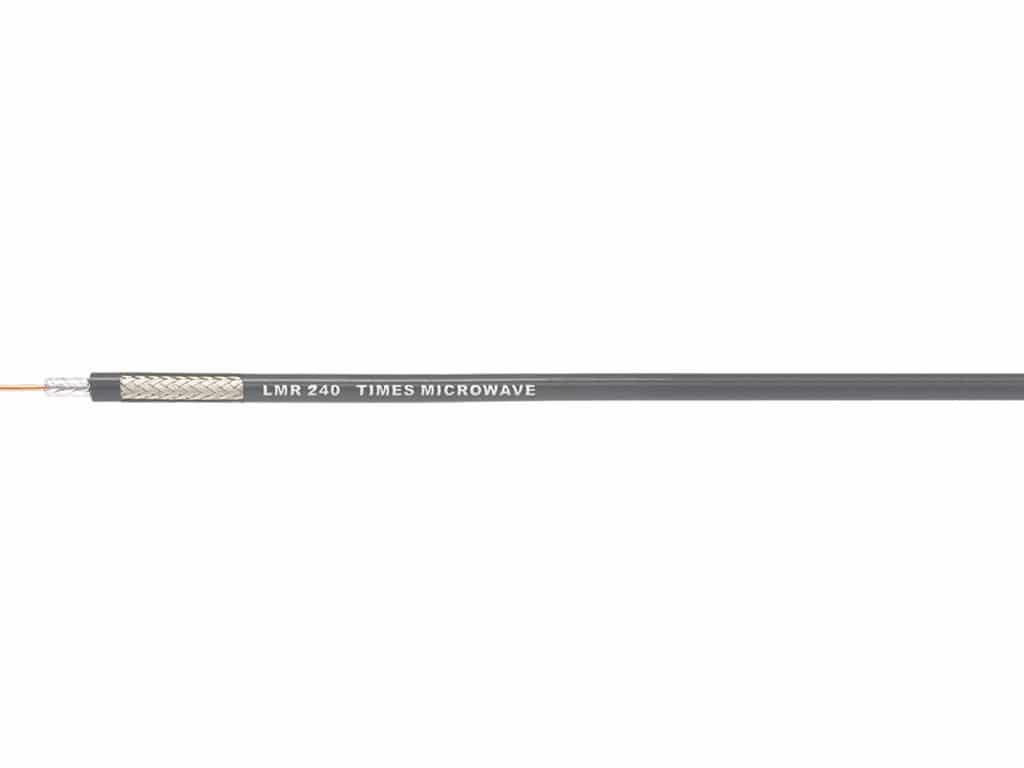
كابل متحد المحور منخفض الخسارة LMR 400 مرن، بطول 500 م
50 Ohms coax cable with UV Resistant jacket. Great drop-in replacement for RG-8/9913 cables. Designed for antenna feeder jumper assemblies runs requiring a high-performance, flexible, low loss RF cable.
LMR 400 is a popular choice for high-power and long-distance applications, as it has a low loss of signal even at high frequencies. It is also easy to install and terminate, and it can support a variety of connector types.
The LMR 400 coaxial cable was created by the American company Times Microwave Systems, which is a leading manufacturer of coaxial cables and related products for the telecommunications and aerospace industries. The company was founded in 1948 and has since developed a range of innovative and high-performance coaxial cable products, including the LMR series, which has become a standard in the industry.
There are several versions of LMR 400 coaxial cable, which may have different specifications and features depending on the intended application. Here are some of the common versions:
- LMR 400: This is the standard version of the cable, with a solid polyethylene (PE) dielectric and a black polyethylene jacket. It is suitable for a wide range of applications, including Wi-Fi, cellular, and satellite communications.
- LMR 400-DB: This version of the cable has a dual-braided shield for improved shielding effectiveness and lower signal loss. It is suitable for applications where high interference is present.
- LMR 400-UF: This version of the cable has a thinner, more flexible jacket made of fluorinated ethylene propylene (FEP) for improved flexibility and easier installation. It is suitable for applications where space is limited or where flexibility is required.
- LMR 400-LLPL: This version of the cable has a lower loss of signal than the standard LMR 400, making it ideal for long-distance and high-power applications. It features a corrugated copper outer conductor and a low-density polyethylene (LDPE) dielectric.
- LMR 400-75: This version of the cable has a 75 ohm impedance, which is suitable for video and television applications.
These are just a few examples of the LMR 400 versions available on the market. Each version may have different specifications and features, so it’s important to consult the manufacturer’s datasheet to determine the best cable for your specific application.
| TC-400-TM-RP | EZ-400-NF-X | TC-400-4310M-X |
| TC-400-TF-RP | EZ-400-BM-RA-X | TC-400-TM-RP-RA-D |
| SC-400-NM | EZ-400-BM-X | TC-400-SF-X |
| EZ-400-TM-X | EZ-400-4195M-X | TC-400-QNM-X |
| TC-400-HNM-RA | TC-400-NFC | TC-400-BM-RA-D |
| EZ-400-716M-RA-X | TC-400-SM-X | EZ-400-TM-RP |
| EZ-400-NMH-X | EZ-400-TF-X | EZ-400-TF-RP |
| TC-400-716M-X | TC-400-TF-X | EZ-400-TF-BH-X |
| TC-400-716M-RA-D | TC-400-716FC | EZ-400-UM-X |
| TC-400-TM | TC-400-SM | EZ-400-UM-RA-X |
| TC-400-NMH-X | TC-400-MUHF | EZ-400-QNM-X |
| EZ-400-NMC-2-D | TC-400-716FC | EZ-400-4310M-X |
| TC-400-TM-RA-D | TC-400-SM | EZ-400-4310M-RA-X |
| TC-400-NMC | TC-400-MUHF | EZ-400-QNF-X |
| EZ-400-TM-RA-X | EZ-400-NMK-X | EZ-400-QNM-RA-X |
| TC-400-NF-X | TC-400-NMC-2 | EZ-400-UM |
| Environment | Outdoor |
|---|---|
| PE | Min. Bend Radius (mm) |
| Impedance (ohms) | 50 |
| Max Frequency (GHz) | 6 |
| Weight | 0.1012 Kg/m, 0.068 lb/ft |
| Operating Temp.°C (°F) | -40° to 85°C, (-40° to 185°F) |
| Min. Bend Radius (mm) | 25.4 |
| Min. Bend Radius (in) | 1 |
| Bending Moment (Nm) | 0.68 |
| Bending Moment (ft-lb) | 0.5 |
| Power Handling (DWV) | – |
| Length | 1m, 2m, 3m, 4m, 5m, 10m, 20m, 30m, 40m, 50m, 60m |